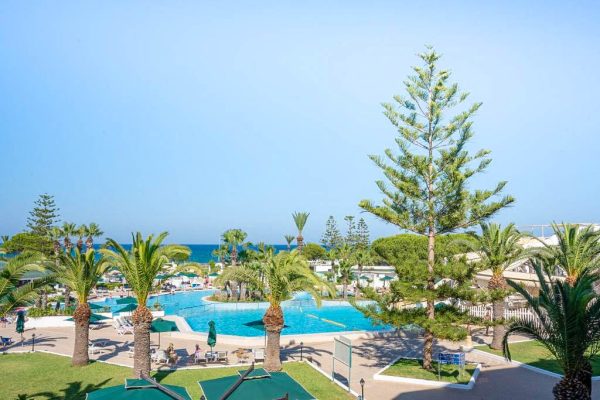
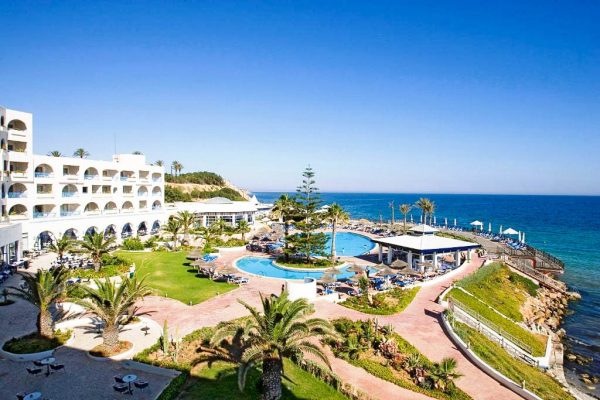
Tunisia Travel Guide – transportation, hotels, safety tips + 1-week itinerary
A complete Tunisia travel guide with all the information you need regarding hotels, restaurants, transportation and the best travel tips for those visiting the country. We’ve also included an itinerary with everything you should see and do in Tunisia in 1 week.
Often seen as little more than a pleasant beach destination that goes lighter on the wallet compared to other seaside spots along the Mediterranean, Tunisia is a surprisingly diverse tourist destination. Located in the heart of the Maghreb, the country was one of the most important parts of the legendary Roman Empire, boasting some of the best archaeological sites in the world (including an ancient colosseum that can rival that of Rome).
Even so, Tunisia’s outstanding tourist offerings go far beyond the idyllic beaches and extraordinary Roman and Carthaginian ruins. Add in a couple of beautiful, historic Islamic cities (and their medinas), the majestic dunes of the Sahara, Berber troglodyte homes and even a handful of filming locations for the Star Wars movie saga, and – we guarantee – you’re in for one hell of an adventure! A country of hospitable people, affordable prices, ancient history and wonderful food, that often lives in the shadow of its more popular neighbors Morocco and Egypt!
So, if you’re planning a trip to this stunning destination, our ultimate Tunisia travel guide is here to help. In addition to practical information about hotels, restaurants, transportation and safety tips, we’ve also put together an itinerary with all the places you must see and visit in Tunisia in 1 week.
Tunisia Travel Guide

How to get to Tunisia – Flights from the UK
While there are several international airports scattered around the country, most tourists fly into three of them: Tunis–Carthage International Airport, the Monastir Habib Bourguiba International Airport or the Djerba–Zarzis International Airport.
As such, if you’re traveling from the UK, it is possible to fly directly to Tunis from London-Heathrow (Tunisair) and London-Gatwick (Nouvelair and Tunisair). On the other hand, if you want to fly to Djerba, you can do so from London-Luton (Easyjet) and Manchester (Easyjet).
NOTE: Alternatively, you can travel to Tunisia by ferry from France (Marseille and Corsica) and Italy (Sardinia, Sicily, Genoa, Salerno and Civitavecchia). The journeys are usually quite long and fares aren’t exactly cheap. However, if you find a cheap flight from your home country to one of these port cities, you may end up saving some money compared to flying all the way to Tunisia – especially during peak tourist season! You can search for routes and fares on Direct Ferries.
How many days do I need to visit Tunisia?

Truth be told, one would easily need a full month to see everything Tunisia has to offer, including visits to the Sahara Desert, to the country’s most popular beach resorts and to all of its archaeological ruins.
However, for those with limited time and/or budget, a full week would be the bare minimum to experience the essentials in Tunis (with a couple day trips added to the mix), relax by the coast in Djerba, explore the jaw-dropping arena in El Jem and check out the oasis, Berber sites and desert towns in the Sahara.
Tunisia Travel Guide – Best time to visit the country

While the temperatures may be quite different depending on how close you are to the coast or the desert, it is pretty common for thermometers to reach close to 40°C in the south of Tunisia during the Summer. On the other hand, this can be a wonderful time to hit the beach in the resorts of Djerba and Monastir. Be that as it may, the best time to visit the country for those wishing to do a healthy mix of beach, desert and cultural tourism would be during shoulder-season, especially in May/June and September/October, when temperatures are good enough to dip your toes at the beach and comfortable enough to walk around and explore. As for the chances of rain, they’re not really an issue regardless of the time of year (although you can catch some rain in the north during winter time).
Speaking of winter, the weather is a bit colder and more humid during the season, although still incomparably nicer compared to most of Europe. You can expect conditions to be somewhat similar to those of Southern Europe, since the weather in Tunisia isn’t as “extreme” as in Egypt, Morrocco or Algeria.
Tunisia Travel Guide – Documents needed for your trip
In order to enter Tunisia, British and Irish travelers need to show their passport. While local authorities would usually allow citizens from EU countries to enter with an ID card and a hotel booking confirmation, bringing your passport is now mandatory since January 1st 2025. The document should be valid for a minimum period of 6 months from the date of entry into the country.
Finally, it’s worth mentioning that passport holders from the UK/Ireland can stay in Tunisia without a visa for up to 90 days.
Tunisia Travel Guide – Internet and SIM Cards
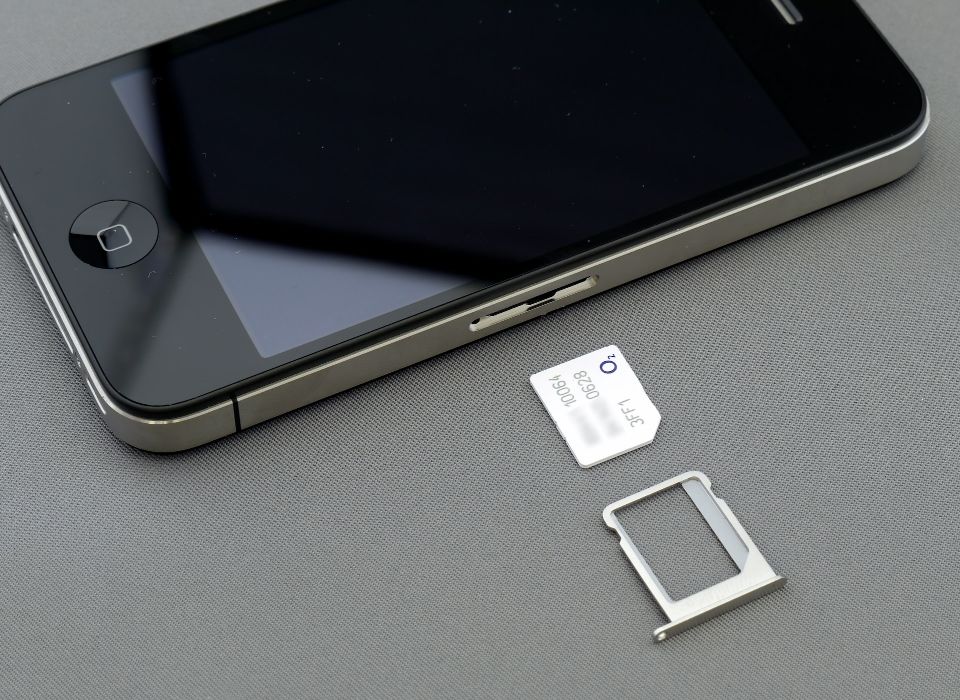
Since there is no special agreement in place between the UK and Tunisia regarding international communications and roaming fees, using your regular phone plan is a big no-no!
Therefore, our recommendation is that you either get an Esim before leaving the homeland or buy a physical SIM card in your destination. However, we advise against buying your SIM card at the airport, since prices are usually higher than those you’d find in an official store. Plus, if you get your card from a store you can customize your package, meaning you can just buy data without the need to subscribe to text messages and local calls that you’re not planning to use. In Tunisia, there are 3 big companies that pretty much run the mobile data market: Orange, Ooredoo and Tunisie Telecom. Keep in mind the process is a bit more convoluted than simply getting a pre-paid plan, since you’ll have to write down a specific code for each data bundle you wish to buy with your recharge. Still, any store clerk can easily help you out with that!
Tunisia travel guide – Orange SIM Card
- 3alami (choose package)
- Data: 6GB (TND 15); 25GB (TND 30); 60GB (TND 60)
- Local calls: 122 mnts (TND 1.4); 305 mnts (TND 3.5); 610 mnts (TND 7)
- International calls: 10 mnts (TND 7); 20 mnts (TND 8); 30 mnts (TND 20)
- Validity: 30 days
Tunisia travel guide – Tunisie Telecom SIM Card
- Tourist pack
- Data: 25GB
- Local calls: 150 minutes
- Price: TND 30
- Validity: 30 days
Tunisia travel guide – Ooredoo SIM Card
- Pack Holiday SIM 30 DT
- Data: 10GB
- Local calls: 180 minutes
- International calls: 20 minutes
- Text messages: 40
- Price: TND 30
- Validity: 30 days
Tunisia Travel Guide – Withdrawals, banking fees and travel budget

With the Tunisian Dinar (TND) as the country’s official currency, any withdrawal using a UK bank card might incur in the payment of several different fees. Besides the percentual fee referring to the currency conversion, some UK banks may also charge a flat commission for withdrawals made outside the UK. In some instances, you may well end up paying 5%-6% of your original withdrawal in banking fees.
On the other hand, exchanging money before your trip is not a viable solution either. Besides not being any cheaper, it’s also not safe or wise to carry so much money on you during your trip. As such, we recommend using the services of online banking fintech companies such as Revolut, N26 or Monzo.
Although each have their own limitations and fees, they allow you to withdraw a certain amount in foreign currency without any fees involved. And even after that threshold is reached, costs are much smaller when compared to traditional banks. Keep in mind, though, this does not apply to fees issued by local banks for withdrawals made with foreign cards. Sadly, all Tunisian banks charge a fee for withdrawals made with a foreign card, usually ranging from 10 to 15 TND. Be that as it may, a message will always pop up every time there is a fee per withdrawal, so you will never be caught unaware.
It’s also worth mentioning that cash is still king in Tunisia, as there are lots of shops and restaurants that don’t even accept card as payment. Furthermore, if you prefer to take cash and exchange your money in Tunisia, here are five exchange offices we can recommend in Tunis and Djerba:
- Now Xchange – Tunis
- Carthage Eagle Exchange Bardo – Tunis
- Corniche Change – Tunis
- Happiness Exchange – Djerba
- Cash Zone Touristique – Djerba
Tunisia Travel Guide – Common scams and frauds

Contrary to what many might assume, Tunisia is actually quite safe. Unfortunately, the country’s once booming tourist industry took a hit after a series of terrorist attacks in 2015, and still hasn’t been able to recover ever since. That perception of insecurity is further fueled by the travel advisories issued by both the UK and the US, which have increased the alert level in the country (or in some regions) since the Israeli conflicts with Palestine (2023) and Iran (2025). Nonetheless, if we look at the official numbers, there’s actually a higher incidence of terrorist attacks in certain European countries (like France) than in Tunisia. Still, tourists are advised to stay away from the border areas with Algeria and Lybia.
In most cities and popular seaside resorts, the streets remain lively even at night, and incidents of violent crime or robbery are rare. That being said, using common sense is key. That means no taxis whose drivers refuse to start the meter, no accepting help from strangers when you’re using an ATM and always keeping an eye out for your stuff when you’re walking through busy areas (such as inside the Medinas). To sum up: don’t do anything you wouldn’t feel comfortable doing anywhere else! For women, and although you may still be the recipient of unwelcome attention and light verbal harassment, rest assured Tunisia is actually one of the Arab nations where women enjoy the highest levels of freedom and autonomy. Besides, is one of the very few countries in the region to hold free elections, and where people enjoy total freedom of religion and uncensored internet.
In fact, your main source of concern when visiting Tunisia is to avoid falling for a scam. Still, the scamming level is nowhere near what you’d find in Egypt, Morrocco or even Jordan, where the chances of being approached by someone trying to sell you something or take advantage of you are much higher. Keep in mind most people are just trying to make a living while having to survive on criminally low wages. Be polite but firm when rejecting their advances. That, coupled with a few basic Arabic key expressions – such as “no, thank you” (leh, shukran) – is usually enough to curb their enthusiasm and have them move on to the next tourist.
Also, keep in mind that while homosexuality is generally tolerated among tourists, it’s still officially illegal in Tunisia (avoid PDAs) and that tap water is not proper for drinking. Lastly, and unless you are a very experienced hiker in this type of terrain, venturing alone into the Sahara Desert is a terrible idea!
Where to sleep in Tunisia – Hotels and Accommodation

If you’re looking out for a place to stay on our Tunisia travel guide, then we got you covered!
Despite its popularity among tourists, Tunisia remains a budget destination for the average European visitor. This goes for restaurants and markets, but also for accommodation, with plenty of modern, comfy rooms at friendly rates.
That being said, here are some options based on the cities we recommend you to stay at:
Hotels in Tunis
- € – Le Parisien Tunis
- €€ – Kyriad Prestige City Center Tunis
- €€€ – Sheraton Tunis Hotel
- €€€€ – Hotel Royal ASBU Tunis
Hotels in Djerba
- € – Hotel Djerba Inn
- €€ – Dar Chick Yahia Ile De Djerba
- €€€ – Radisson Blu Palace Resort & Thalasso
- €€€€ – Iberostar Selection Eolia Djerba
Hotels in Sousse
- € – Hotel Paris
- €€ – Dar Badiaa
- €€€ – Hotel Marhaba Club
- €€€€ – TUI BLUE Scheherazade
Tunisia Travel Guide – Transportation between Tunis Airport and the city center

Located less than 8km away from the city center, the best way to travel between Tunis Airport and the city center is aboard bus 635 from SNT. The stop is located outside the airport, so you’ll need to walk a few hundred meters to the main road (the stop is here). The bus operates between 06h40 and 20h00, leaving every 30 minutes. This line links the airport to Tunis Marine Station, in the downtown. Tickets cost 1 TND and can be paid in cash directly to the driver.
Finally, if you happen to land in Tunis outside of the bus operating hours, you may always rely on a taxi. Unfortunately, the taxi stand at the airport is absolutely atrocious, as every single cab driver will do his best to try to scam a few extra dinars out of your pocket. Previously, passengers still had the possibility of calling a Bolt, but the ride-sharing app was recently banned (2025) in Tunisia due to allegations of fraud and money-laundering. The fair price to take you from the airport to the city center should be around TND 20… but good luck finding a cab driver willing to charge you that much! Alternatively, you can try to get out of the airport and find a taxi in the nearest roundabout.
Tunisia Travel Guide – Transportation and how to move around between cities
Given that Tunisia is one of Africa’s most developed nations, the country actually boasts a relatively modern and well-kept transportation network of train and buses that will help you move around between all the most important sites and tourist attractions.
Besides, and even if you can’t rely on buses nor trains for some reason, you can also make use of shared taxis (louages). However, if you wish to follow our itinerary down below, nothing beats renting your own car when it comes to autonomy and convenience! Nonetheless, here is an overview of how to move around in Tunisia:
Trains in Tunisia

While the national railway system doesn’t quite reach every corner of the country, mostly covering the northern half of the territory, it is perfectly possible to travel between Tunisia’s larger cities by train! Unfortunately, the same can’t be said about buying tickets beforehand, as the website from SNCFT – the Tunisian Railways – does not support online purchases or bookings. Still, you can use the platform to check routes and schedules. Besides the standard category (second class), passengers can also travel in First Class and in Classe Comfort, where carriages are mode modern/comfortable and there’s more room for your legs. Depending on the route, some trains may offer a single class (Express) for all travelers.
Although most vehicles are relatively modern, do not expect your journey to be particularly enjoyable. Some carriages are in need of urgent renovation work and may not have AC, which can make a huge difference when traveling in the Summer months. Besides, the railway service isn’t exactly famous for its reliability or punctuality, as delays are pretty frequent. Finally, if you travel on a night train, keep in mind there are no births or private cabins. Everyone gets a standard, regular seat. On the bright side, tickets are usually quite cheap! On a footnote, we remind you that there is no train service in Djerba.
Besides SCNFT, local company Transtu also runs a train line. This line is called TGM and connects the center of Tunis to the districts of La Goulet, Carthage, Sidi Bou Said and La Marsa. A second-class ticket for the whole journey costs just 0.8 TND. That said, here are some of the most popular train routes in Tunisia:
- Tunis – Carthage
- Tunis – Sidi Bou Said
- Tunis – Sousse
- Tunis – Monastir
- Tunis – Metlaoui (change for a bus to Tozeur)
- Sousse – Monastir
- Sousse – Metlaoui (change for a bus to Tozeur)
Buses in Tunisia

As for the south of the country and for towns up-north that aren’t covered by the railway system, you always have the option to use the bus. Currently, intercity buses are managed by SNTRI and it is not possible to buy tickets online. This ends up being quite the inconvenience, as you’ll need to waste some of your precious time visiting the station one of two days before your journey to buy your ticket (or you can try to buy on the day, knowing there’s always a chance they’re sold out). Be that as it may, you can use the company’s website to search for routes, times and fares. While the fleet isn’t exactly state-of-the-art, buses are clean and reasonably comfortable. Besides, compared to trains for the exact same routes, buses are typically quicker and prices are similar. Moreover, buses are more reliable when it comes to times, although both modes often experience delays.
As before, here’s a summary of the most convenient bus connections to help you navigate any of our suggested itineraries:
- Tunis – Sousse: 2h15; TND 10.80
- Tunis – Tozeur: 15h00; TND 30.70
- Tunis – Djerba (Houmt Souk): 9h00; TND 38.10
- Sousse – Tozeur (change buses in El Hamma): 6h40; TND 25.20
- Sousse – Kairouan: 1h00; TND 10
- Sousse – El Jem: 1h00; TND 5
- Sousse – Djerba (Houmt Souk): 7h00; TND 25.20
- Djerba (Houmt Souk) – Tozeur (change buses in Kairouan): 8h45; TND 35.80
Shared Taxis (louages) in Tunisia

A well-established practice in Tunisia (and widely popular across the Maghreb and the Arab world), it’s very common to watch the locals rely on shared taxis over trains and buses. Unsurprisingly I must say, as shared taxis are always faster and prices aren’t that different (if you’re not scammed) from what you’d pay on other modes of transportation.
In Tunisia, these shared vehicles are called “Louages” and can be easily spotted. They are usually yellow minivans (9-seaters) with a black stripe, or, alternatively, white minivans with a blue or red stripe. If you need to know where to board these vans, just use Google Maps and type in “louage station” – every city, town and village has one! Once you get to the station, just say where you want to go and someone will take you to a minivan that runs that route.
This is where the “shared” in shared taxis comes into play, as you’ll then have to wait for the louage to fill up before the driver departs – it never takes more than 10/15 minutes – with the fare split equally among passengers. Tickets can be purchased directly from the driver or at the station’s ticket office (more common). Although this isn’t exactly the most comfortable way to ride, trips are usually quicker compared to the bus. Besides, they’re also an excellent alternative if the running times for the conventional transportation methods don’t really suit your needs. As for fares, they’re somewhat similar to the bus (shared above). Luckily, there’s no need to haggle or fear being charged more than the locals, as ticket prices are typically displayed at the office.
Renting a car in Tunisia
To cap off our discussion on transportation, we leave you with the ever-convenient option of renting a car. In fact, if you want to abide by our itinerary and see everything in Tunisia in just 1 week, renting a car is paramount! Naturally, major international car rental companies are readily available across Tunisia, and it’s extremely easy to find offices both in the cities and inside the local airports.
However, there are several factors to consider before making this decision. Firstly, it’s important to note that driving in major Tunisian cities can be pretty hectic, as most drivers show little to no regard for signals or any traffic rules. Still, it is a step up from the often-lawless driving you find in Morrocco or Egypt. Outside major urban areas, driving in Tunisia is actually quite tame, even if conditions in local and secondary roads may not always be optimal. On the other hand, highways are reasonably well-kept… but you’ll have to pay for tools! To make up for it, gas prices are really cheap. Also, keep an eye out for speed bumps – there are loads of them and they pop up when you least expect it!
Contrary to what one might think considering a big part of the country is covered by desert, renting a 4×4 isn’t really required. Unless you’re planning on going rogue and heading to the dunes, a normal 2-wheel drive will do the trick. Even when riding in the Sahara, all noteworthy attractions can be accessed through paved roads, meaning renting a 4WD can be skipped. Still, if you want to go deep into the Sahara you can use a “regular” car to reach nearby towns and then either hire a taxi or join a tour.
As for what company to use, and especially if you’re planning on working with a local provider, make sure to browse online reviews and carefully read all the paperwork before signing. Plus, taking photos and videos of the car before hitting the road (as proof of its condition) is a must! After all, the tourism industry is North Africa littered with all kinds of scamming horror stories, and though it may not be pretty to assume and stereotype, it’s still better to play it safe than crying over spilled milk. Finally, it’s worth noting that you’ll need an International Driving Permit if you wish to rent a car in Tunisia. While you may have heard from other travelers that this isn’t necessarily enforced by renting companies or by the police – as many of them will just ask you for your passport and home country’s license – the truth is that you are legally required to carry an IDP.
Best beaches in Tunisia

Marsa Beach: I suppose the beach isn’t the first thing that comes to mind when you think of Tunisia’s capital. However, just a 35-minute ride on the TGM train will take you to the suburb of La Marsa, known for its strong French influence and pleasant coastline.
Plage de Sidi Mahrez: On the other hand, beach tourism is probably all that comes to mind when you think of Djerba – the premier beach destination in Tunisia. Naturally, there’s no shortage of noteworthy beaches in this charming Mediterranean town with a strong Jewish influence. Plage de Sidi Mahrez is just one of them, though you could just as easily go for Plage El Hachen or Plage Edzira instead.
Hammamet Beach: An excellent day trip option from Tunis, Hammamet is well known for its whitewashed houses splashed with blue domes and window frames, reminiscent of Greek villages. To top it off, the main beach stands out as one of the best in the country, though it tends to get crowded during peak tourist season.
Las Vegas Beach: Considering Sousse is the third biggest city in Tunisia, it’s somewhat surprising how its coastline features some pretty cool beaches. This is just one of them, located only 4 km away from the historic center. If you’re looking for something even more central, you can go for Bou Jaafar Beach.
Qaraiya Beach: Though we didn’t include the city in our itinerary, Monastir is probably the only beach destination in the country that can stand head-to-head with Djerba. This beach is a perfect example of why this small city has been growing in popularity, with a natural bay bordered to the south by rocky cliffs.
Salakta Beach: Located in the town of the same name, a coastal hidden gem between Mahdia and Chebba, this might just be the best-kept secret on the list. With its powdery sands and crystal-clear waters, it’s an excellent place for a quiet swim away from the hordes of tourist.
Al Huwariyah Beach: Turquoise, dramatic cliffs and dozens of trails and caves you can explore by swimming or kayaking… what’s not to love?! Sure, it lacks a proper sand stretch, but it’s still an amazing option relatively close to Tunis.
Kerkennah Islands: Did you know Tunisia has an archipelago located about 20 km off the coast? Made up of five islands, the two main ones – Chergui and Gharbi – are both excellent beach destinations. To get there, you’ll need to take a ferry from the city of Sfax and the trip takes about an hour.
Tunisia Travel Guide – Local food and traditional dishes

Given the country’s location and history, at the geographical and cultural crossroads of Berbers, Mediterraneans, Jews, French, Ottomans and Arabs, it’s no surprise that Tunisia’s cuisine reflects all these influences. And yet, what could have become a familiar fusion easily found in any neighboring country, has instead offered the world a truly distinctive cuisine. Yes, the influences are there, but the food itself is unique and unmistakably Tunisian. At the heart of it all, foodies will find the Harissa, a spicy red paste made with chili peppers and spices, that features in loads of Tunisian specialties. Technically, you can mix Harissa into anything you like, although locals typically use it in Couscous. Considered the country’s national dish, it’s a versatile delicacy that can be served with meat, fish or vegetables.
However, Tunisians don’t survive on couscous alone, so it’s worth exploring local restaurants and sampling other classics. Notable dishes include Kabkabou, a fish stew in tomato sauce; Chorba, a traditional lamb soup; Tagine, which, unlike in Morrocco, is actually more like a quiche/frittata; Slata Mechouia, a grilled vegetable salad combined with egg; Kafteji, a mix of sautéed vegetables with spices; and Lablabi, a chickpea soup with harissa and meat broth, mixed with pieces of stale baguette. For breakfast, it’s almost a given that you’ll try Shakshouka, poached eggs in a tomato sauce. Lastly, no meal is truly complete without Mlawi, Tunisia’s typical flatbread (similar to pita) that is served alongside nearly every dish.
On the other hand, if you’re in the mood for a quick street snack, it’s incredibly easy to find stalls selling specialties like Brik, a flaky fried pastry filled with all sorts of stuffings; Fricassé, a fried bread sandwich with tuna, olives, potato, boiled egg and harissa; or baguette sandwiches, an undeniable legacy of French colonization. When it comes to sweets and desserts, don’t miss out on Bamboulinis, aka Tunisian donuts; Makroudh, cookies made of semolina, dried fruits and dates; Kaak Warka, round, flaky pastries dusted with powdered sugar; or Baghrir, the Tunisian pancake. Evidently, you’ll also find popular treats common across most Muslim countries, such as Baklava and Zelabia.
Tunisia Travel Guide – What to see and do in 1 week
Although 1 week is definitely too short to see the best Tunisia has to offer, and if you really have no leeway to add a couple extra days, we’re still here to help you make the most of your experience. To do so, though, you’ll need to keep up the pace, even if you only end up visiting the “essentials”. By following our ambitious plan, you’ll still get to explore the capital Tunis, along with a cool day trip to both the Ruins of Carthage and Sidi Bou Said; the island of Djerba, regarded as the nation’s top tourist destination; the Amphitheater of El Jem, an ancient colosseum able to rival that of Rome; the historic cities of Sousse and Kairouan; and even the immense Sahara, setting up base in the desert town of Tozeur.
So, without further ado, here are the cities, places and tourist attractions you should visit in a 1-week itinerary through Tunisia:
NOTE: So that you can visit all of these places in just one week, it is highly recommended to rent a car. If you don’t feel comfortable driving abroad, then we recommend factoring in a couple extra days to accommodate the journeys from Sousse to Tozeur and from Tozeur to Djerba. Alternatively, you can simply leave out Tozeur and the Sahara and stick to the 8-day itinerary.
Tunisia 1-Week Itinerary: Day 1 – Tunis: Bardo, Medina and Ville Nouvelle

As the main gateway to the country, chances are your adventure will begin in Tunis, the capital of Tunisia! Despite being located in a predominantly Muslim country, Tunis is surprisingly cosmopolitan, with plenty to see and do and a strong French/Mediterranean influence that stands in stark contrast to the rich Islamic culture and architecture. Besides, and though this may surprise a lot of people, the city is home to one of the very best museums in the world: the Bardo National Museum (TND 13). Located outside the city center, this is exactly where you’ll kickstart your day, exploring the opulent palace and its absolutely stunning mosaic collection. A perfect introduction to Tunisia’s long history as a Roman and Carthaginian colony, as well as to the many empires that passed through, visiting the Bardo is a must – even for those who don’t usually enjoy museums! Afterwards, it’s time to head to the Medina of Tunis, regarded as the historic heart of the city. Like other Islamic historic quarters, the local medina is a maze of narrow streets, alleys and passageways where getting lost is half the fun. Luckily, the setting is couldn’t be more inebriating, filled with countless mosques, madrasas, historic cafés, souks and imperial mansions. That said, one of the first places to visit is the ottoman-inspired Sidi Mahrez Mosque, famous for its domes. Sadly, non-Muslims are not allowed inside mosques in Tunisia, so you’ll have to settle with admiring them from the outside.

To get a small taste of the Medina’s many charms, we suggest walking down Rue Sidi Ibrahim and Rue du Pacha, two crossing streets where you can find an unusual concentration and variety of historic buildings, including palaces and mausoleums. Don’t be shy to peek inside whenever you can – you’ll never what you may find! Next up is the Souq des Chechias, where they sell the traditional Tunisian hats you’ll see everywhere (one of many markets inside the medina), and the Ez-Zitouna Mosque, the most important mosque in Tunis. Along the way, don’t miss the chance to climb up to the rooftop of one of the many cafés or souvenir shops in the area to enjoy a panoramic view of the old town. If you need a recommendation, we suggest Café du Souk. When you’re done exploring the medina, you can exit through the Bab el Bhar Gate, once the main link between the walled center of Tunis and the rest of the country. However, colonial times brought structural changes to the city, and today the gate connects the medina to the district of Ville Nouvelle, a part of the city that was mostly developed by the French. In addition to the Cathedral of Saint Vincent de Paul, the most obvious symbol of French occupation, the entire layout changes drastically, with the medina’s narrow streets giving way to tall classical buildings, wide boulevards and trendy cafés. This is especially noticeable along Avenue Habib Bourguiba, which wouldn’t feel out of place in any major European city.

First day wrap-up:
- Bardo National Museum
- Medina of Tunis
- Sidi Mahrez Mosque
- Rue Sidi Ibrahim
- Rue du Pacha
- Souq des Chechias
- Café du Souk
- Ez-Zitouna Mosque
- Bab el Bhar Gate
- Ville Nouvelle
- Cathedral of Saint Vincent de Paul
- Avenue Habib Bourguiba
Where to eat in Tunisia – Best restaurants in Tunis
- Fondouk El Attarine (Tunisian traditional)
- Dar Slah (Tunisian traditional)
- Restaurant Belkadhi (Tunisian traditional)
- Essaraya Restaurant (Tunisian traditional)
- Bab Tounès (Tunisian traditional)
- Restaurant Com_Art (Tunisian traditional)
- Restaurant El Abed (Tunisian traditional)
- Saray Turkish Cuisine (Turkish)
- L’Ardoise (Italian)
- The Zink (hamburgers)
Tunisia 1-Week Itinerary: Day 2 – Tunis: Carthage, Sidi Bou Said and La Marsa

After exploring downtown Tunis, your second day in the capital will be spent in the suburbs, visiting two of the most iconic sites in Tunisia. Without further ado, your first stop will take place at the Archaeological Site of Carthage, by far the world’s most important remnant of this ancient Mediterranean civilization. Although they were eventually wiped out by the Romans, this site was the capital of legendary Carthage! Today, the archaeological park is filled with ruins and remnants from both the Carthaginian era and the later Roman occupation, including temples, baths, theaters, aqueducts and necropolises, along with a museum displaying artifacts uncovered during excavations. Since the ruins are spread over a relatively large area, you can buy a combined ticket (TND 12) that allows visitors inside all the sites. To get to Carthage from Tunis simply take a TGM train, the local line that connects the city center to the suburb of La Marsa, with a stop near the archaeological site. The journey takes less than 30 minutes and tickets cost TND 0.8.

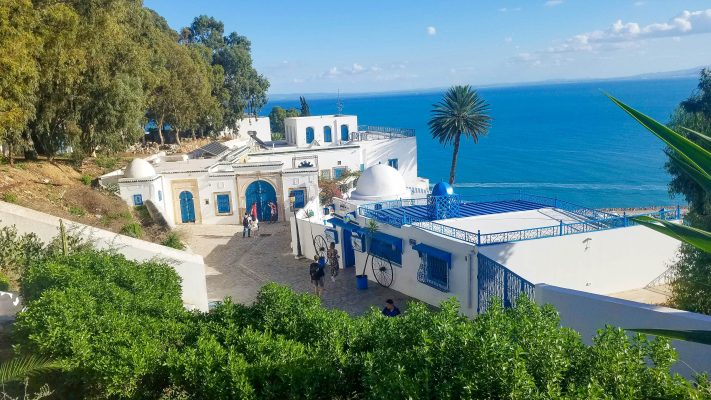
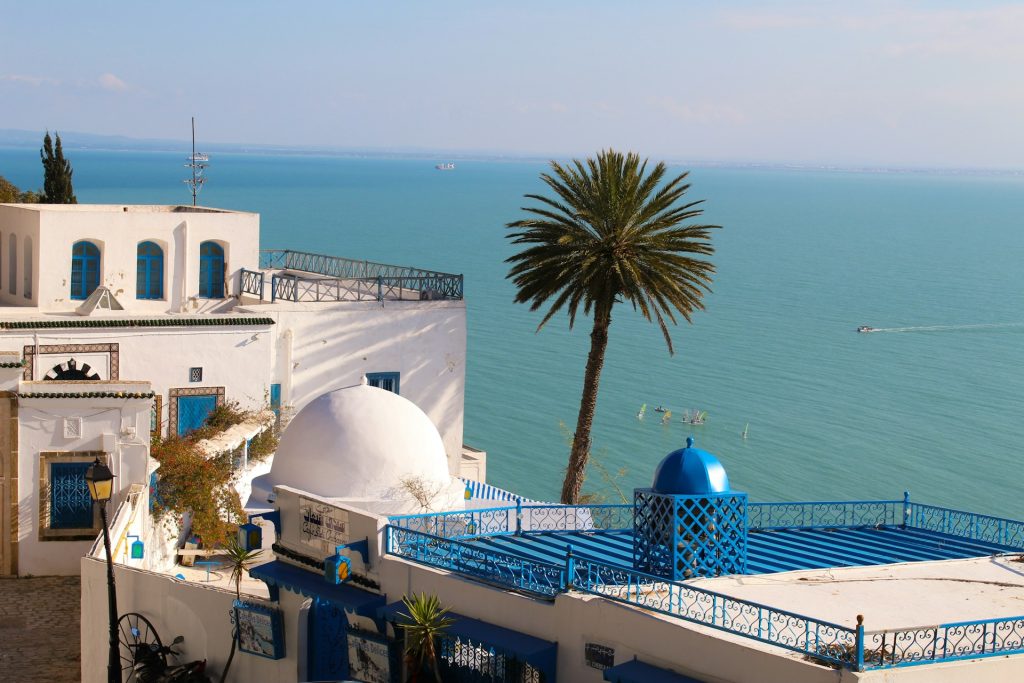
After visiting the ruins, hop back on the train and continue heading in the same direction (towards La Marsa). However, this time you’ll get off at Sidi Bou Said, one of the most picturesque districts in Tunis. For those who haven’t done their homework yet, Sidi Bou Said looks like a tiny slice of Greece in the middle of Tunisia. Think narrow alleys and whitewashed buildings boasting domes, doors and window frames painted in blue. The perfect stereotype of Greece, but at a fraction of the cost! There isn’t a long list of attractions here, but wandering the streets aimlessly is what you came for. For the rest of the afternoon, you can ride the TGM line to its final stop in La Marsa, a suburb of Tunis known for its seafront promenade, beach and strong French influence. It’s a great place to get a sense of how diverse the city can really be, especially after spending the previous day in the Medina!

Second day wrap-up:
- Archaeological Site of Carthage
- Sidi Bou Said
- La Marsa
Tunisia 1-Week Itinerary: Day 3 – Sousse

Leaving Tunis behind, you’ll want to set off early in the morning to complete the two-hour drive to Sousse, the third-largest city in the country. Although it remains a relatively unknown destination on the international travel scene, Sousse is a must-see on any Tunisian itinerary, especially because of the many resorts lining its coastline and its historic center recognized by UNESCO as a World Heritage Site. That said, you’ll spend most of your time in the city exploring the Medina of Sousse, a spectacular walled old town where you can wander among ancient buildings, street markets, mosques and grand mansions. This district is beyond picturesque, and a serious contender to the list of places that are the most likely to exceed your expectations. Entering the Medina through Bab-El Gharbi Gate, you’ll wander along cobbled alleys, ancient archways and pedestrian squares. Sooner or later, you’ll inevitably come across the main highlights of the historic center, starting with the imposing Ribat de Sousse (TND 8). A “Ribat” is an Islamic religious fortress, with its residents serving as soldiers that defend the city in times of war, and as religious scholars that devote themselves to faith in times of peace. Because of that, the Ribat is strategically positioned to oversee both the city and the sea, which means that climbing the main tower will grant you the best panoramic view in town!

Right next to the Ribat, you can also visit the Great Mosque of Sousse (TND 5). Although you’re not allowed into the prayer hall, it’s possible to visit the mosque’s central courtyard and admire its architecture. Follow that up with a stroll through the Medina Souq, a huge bazaar that spreads across most of the old town, and don’t miss the La Sofra Cistern, a Roman reservoir – later turned into a prison – that used to store most of the Medina’s water supply. Just outside the walls as you exit through Bab-El Kebli Gate, we recommend visiting the Kasbah, another fortress that, alongside the Ribat, was built to help defend the city from invaders. You may also climb the tower to take in the views. Furthermore, the Kasbah houses the Sousse Archaeological Museum (TND 10), arguably the second-best cultural institution in the country, right after the unrivaled Bardo in Tunis. Still, it’s very much worth a visit! If you still have the time and the energy after all that, feel free to take a stroll along the seafront and maybe even go for a swim at Las Vegas Beach, or, for something closer to the city center, at Bou Jaafar Beach.

Third day wrap-up:
- Medina of Sousse
- Bab-El Gharbi Gate
- Ribat de Sousse
- Great Mosque of Sousse
- Medina Souq
- La Sofra Cistern
- Bab-El Kebli Gate
- Kasbah
- Sousse Archaeological Museum
- Las Vegas Beach or Bou Jaafar Beach
Where to eat in Tunisia – Best restaurants in Sousse
- Restaurant EL SOFFRA Chez Fredj (Tunisian traditional)
- Restaurant Café Seles (Tunisian traditional)
- Restaurant Dar Baya (Tunisian traditional)
- Restaurant du Peuple (Tunisian traditional)
- Restaurant At Bibichou’s (Tunisian traditional)
- Restaurant l’Escargot (French)
- Restaurant El Pescador (fish and seafood)
- THE FIRST Coffee & Resto (breakfast / varied)
- ANBAR Restaurant (varied)
- Invictus (varied)
Tunisia 1-Week Itinerary: Day 4 – Day trip to El Jem and Kairouan

Although Sousse is indeed quite charming, another reason many travelers stop in the city has to do with its proximity to other extremely popular destinations in Tunisia. Today, you’ll visit two of those places, starting with the majestic Amphitheatre of El Jem, located just 70 km away. Seating over 35.000 people, this is considered the largest Roman coliseum in North Africa and the third-largest in the world. However, alongside its sheer magnitude, it’s truly remarkable how well-preserved this arena is, even when compared to its world-famous counterpart in Rome, Italy. The amphitheater once hosted gladiator fights and sporting events, standing today as Tunisia’s most famous tourist attraction and one of the greatest archaeological monuments in the world. Tickets cost just TND 10 and are also valid to enter the El Jem Archaeological Museum and the Thysdrus Archaeological Park, where you can see more remains of the former Roman colony. After exploring El Jem, you’ll get back on the road and drive to Kairouan, the holiest city in Tunisia. In fact, locals claim it’s one of the most important cities in Islam, ranking just behind Mecca, Medina and Jerusalem (though several cities around the world make similar claims).

Regardless, Kairouan is home to several notable monuments, especially around its walled old quarter – the Medina. Much like other medinas in Tunisia, this area is great for a stroll and to snap some beautiful pictures! When it comes to main tourist attractions, and rather unsurprisingly given the city’s notoriety, most of them have spiritual or religious significance. These include the massive Great Mosque of Kairouan, the oldest and most important mosque in the entire Maghreb, the Mosque of the Three Doors (non-Muslims can’t enter), the Shrine of Sidi Abed el Ghariani, the Mausoleum of Sidi Amor Abada and the Bir Barrouta, a historic well believed by Muslims to be connected to a sacred spring in Mecca from which the Prophet Muhammad is said to have drunk. Outside the Medina, another popular stop is the Mosque of Sidi Sahab, also known as the “Barber’s Mosque”, as it was built in honor of a disciple of the Prophet who was known for always carrying strands of Muhammad’s beard. To take a break from the religious sites, and before heading back to Sousse to spend the night, you might also want to visit Dar Hassine Allani, a great example of a traditional old residence.

Fourth day wrap-up:
- El Jem
- Amphitheater of El Jem
- El Jem Archaeological Museum
- Thysdrus Archaeological Park
- Kairouan
- Medina of Kairouan
- Medina Souq
- Great Mosque of Kairouan
- Dar Hassine Allani
- Mosque of the Three Doors
- Shrine of Sidi Abed el Ghariani
- Bir Barrouta
- Mausoleum of Sidi Amor Abada
- Mosque of Sidi Sahab
Where to eat in Tunisia – Best restaurants in Kairouan
- Dar Abderrahman Zarrouk (Tunisian traditional)
- Dar Lella Habiba (Tunisian traditional)
- Sultan (Tunisian traditional)
- GO Café (Tunisian traditional)
- Kafteji Khayri (Tunisian traditional)
- El Brija Restaurant (varied)
- Restaurant Nakcha (varied)
- Dar Mima Chez Mamie (café)
Tunisia 1-Week Itinerary: Day 5 – Tozeur

Now that you’ve had the chance to visit historic cities, archaeological sites and other cultural landmarks in Tunisia, it’s time to explore the desert! As such, we recommend making the journey from Sousse to Tozeur, one of the country’s main gateways to the legendary Sahara Desert. Unfortunately, the distance between the two cities still takes some time to cover (around 5 hours), meaning it will eat up at least half a day in your itinerary. In any case, we recommend settling in, grabbing something to eat and starting to explore right away once you arrive in Tozeur. While the city is primarily used as a base to access the Sahara, it’s always worth taking a walk and getting a glimpse of the Berber culture, which dominates this region of Tunisia!

Given the limited time, there’s no better place to start than the Medina of Tozeur. However, unlike what you’ve seen so far, the historic center of this desert city has a completely distinct atmosphere, with a different architecture style made up of brick buildings, wooden doors and many geometric patterns influenced by Berber design. Additionally, this is not a walled Medina and the surrounding quarters look just the same, so you might find yourself walking through the “new” part of town without even realizing it. While in this area, make sure to also check out Ferkous Mosque and the Central Market. Lastly, you can walk to Ras El Aïn Park and get a lovely view over Tozeur and the surrounding oases. All you need to do is climb the huge rock with the face of a Tunisian poet sculpted on it – can’t miss it!

Fifth day wrap-up:
- Medina of Tozeur
- Ferkouz Mosque
- Central Market of Tozeur
- Ras El Aïn Park
Where to eat in Tunisia – Best restaurants in Tozeur
- Le Minarét Ferkous (Tunisian traditional)
- Restaurant Tisouros (Tunisian traditional)
- Essiguifa (Tunisian traditional)
- Restaurant Le Soleil (Tunisian traditional)
- Resto Café El Berka (Berbere)
- Restaurant Dar Deda (Berbere)
- La Grotte Restaurant (varied)
- Restaurant les Arcades (varied)
Tunisia 1-Week Itinerary: Day 6 – The Sahara

After a good night’s sleep, it’s time to make up for the long detour to Tozeur and finally explore this corner of the Sahara! Before we get started, though, it’s important to clarify that we’ve designed a desert itinerary that focuses on the historical, natural and cultural sites that are unique to Tunisia. Whether it’s oases, fortresses, salt flats or Berber villages, we guarantee that the places we will mention can’t be found anywhere else. However, if you’d prefer a more traditional desert experience, with camel rides, dune bashing or buggy tours, you can always book a tour online. With that said, let’s get to our recommendations. And as we mentioned in the transport section, you won’t need a 4×4 to follow this itinerary, since all the attractions are accessible via paved roads. To kick things off, we’ll begin with one of Tunisia’s niche attractions. After all, the country is well known for being a major filming location for the legendary Star Wars saga, boasting several movie sites that are still open to visitors. One of these sets is Mos Espa, a village located on the planet Tatooine in the movies. In reality, this bizarre place is actually just 40 km from Tozeur, staying open to visitors for free after it was left abandoned once production concluded.

By now, you’ve probably noticed that the area around Tozeur is surrounded by oases, so visiting at least one of them is a no-brainer! We recommend the Chebika Oasis, located near the semi-abandoned village of the same name. It’s astonishing how abruptly the landscape changes, as the arid, barren desert turns into a lush forest of palms and date trees hiding beautiful trails, waterfalls and springs. A bit further north, it’s also worth taking in the view at the Mides Gorge, located right by the border with Algeria. Heading back south, it’s time to drive along the banks of Chott-el-Djerid, a vast salt lake that seems to stretch out as far as the eye can see. Just stop the car and take a short walk onto the salt flats to enjoy the view and the optical illusion. By now, you’ll have probably spent a good four hours on the road (plus time to visit at each stop), so fatigue may be starting to kick in. However, to save yourself some precious time the next day, we recommend making one last effort and spending the night in Douz, a town closer to your next destinations. On the other hand, if you really want to have the whole “sleep in the desert experience”, you can do so at Dunes Insolites, in Sabria.

Sixth day wrap-up:
- Mos Espa
- Chebika Oasis
- Mides Gorge
- Chott-el-Djerid
- Douz or Sabria (to spend the night)
Tunisia 1-Week Itinerary: Day 7 – Djerba

After so much effort and time on the road, we’ve finally reached the part where you can just relax by the beach and bask under the sun! Luckily, you’ll get two days of pure bliss in the famous island of Djerba, considered the most popular beach destination in Tunisia. However, to get there you’ll still need to drive a solid 3 hours from Douz (or 4 hours from Sabria), so it’s best to set off early in the morning to ensure you can at least enjoy the afternoon in Djerba. Oh, and don’t worry — even though it’s an island, there is an overland connection to the mainland!
As you might expect, once you arrive at your destination the afternoon will be spent relaxing at Plage de Sidi Mahrez, the main beach in Djerba. Make the most of the powdery white sands and pleasant Mediterranean waters, as this is one of the top beach spots in all of North Africa! If you don’t feel like spending all your time lying on the towel, we recommend visiting Djerba Explore Park (TND 32.50), a complex that includes a replica of a traditional island village, the Lalla Hadria Museum, dedicated to Islamic art, and the popular Crocodile Farm, home to over 400 crocodiles from various parts of Africa. To cap off the day, you can hit the beach again by heading south to Plage Essaguia.

NOTE: If you’re not in a rush to get to Djerba and are happy with just spending the last day at the beach, you can make several strategic stops along the way. Leaving Douz, you could pass through Matmata, another famous Star Wars filming location known for its troglodyte homes carved into the rock; Tamezret, a scenic abandoned Berber village; and Ksar Jouamaa, one of the best-preserved examples of the fortified granaries/warehouses used by ancient Berber tribes to store their goods.
Seventh day wrap-up:
- Plage de Sidi Mahrez
- Djerba Explore Park
- Plage Essaguia
Tunisia 1-Week Itinerary: Day 8 – Djerba

Despite Djerba’s popularity among beachgoers, the truth is that this island has a very distinct identity. Sure, you can come here just to relax on the beach or stay at resorts, but there’s also a strong historical and cultural identity that is pretty easy to find in town centers, religious buildings, traditional crafts and in the fortresses that rise along the coast. For a healthy mix, you can combine all of those with some beach time, making your last day in Tunisia enjoyable for all kinds of travelers! As such, your final morning in Tunisia will start at the Medina of Houmt Souk, the old town of the island’s capital and largest city. As expected, the setting is incredibly picturesque, with lots of small whitewashed houses that will make you feel like you’re in Greece… but with a clearly Islamic flair! While you’re visiting, you can check out the Mosque of the Turks or the Central Market. Outside the Medina — but still in Houmt Souk — you must visit the Gazi Mustapha Tower, probably the most important and imposing historical building on the island. Once you leave the capital, you can enjoy a couple of hours on the beach at Plage El Hachen, just a 15-minute drive away.

Back on the road, you’ll head south toward Erriadh, a small and unassuming village that’s famous for hosting the ambitious project “Djerbahood”. Created by several French artists of Tunisian origin, the project involved covering the village in street art murals, creating a bold and very popular attraction. A short 1 km walk away, it’s also well worth taking a detour to visit the El Ghriba Synagogue, a building with ornate interiors that stands as the main legacy of the once-thriving Jewish community in Djerba. At its peak, there were three almost exclusively Jewish villages in Djerba, creating demand for the construction of what is now officially the oldest synagogue in Africa, and one of the oldest in the world! As the day draws to a close, continue further south to the village of Guellala, known for its local artisans and pottery. In fact, the streets themselves feel like an open-air workshop, making it the perfect place to shop for souvenirs. Finally, you’ll bid farewell to Djerba (and Tunisia) at the Sidi Yeti Mosque, an abandoned mosque with spectacular views of the sea, where you can watch the sunset for one last time before flying back home.

Eighth day wrap-up:
- Houmt Souk
- Medina of Houmt Souk
- Mosque of the Turks
- Central Market
- Gazi Mustapha Tower
- Plage El Hachen
- Erriadah (Djerbahood)
- El Ghriba Synagogue
- Sidi Yeti Mosque
Where to eat in Tunisia – Best restaurants in Djerba
- Restaurant La Bohême (Tunisian traditional)
- Restaurant De L’île (Tunisian traditional)
- Restaurant Essofra (Tunisian traditional)
- Restaurant Haroun (Tunisian traditional)
- Le Bistrot Djerba (Tunisian traditional)
- Les Palmiers Chez Neji et Catherine (Tunisian traditional)
- Uncle Ali’s FISH restaurant (fish and seafood)
- Restaurant Lella Hadhria (fish and seafood)
- Chez Moktar (varied)
- Restaurant Djerba Lina (varied)
Traveling soon? Get your Holafly eSIM with a 5% discount for seamless internet access in any destination. No more worrying about roaming charges or finding local SIM cards. Enjoy unlimited data and stay connected with ease. Order your Holafly eSIM now »
Heymondo offers a wide range of travel assistance insurance policies with a 5% discount. They combine the best quality, service and price with various levels of coverage, so you’re covered on your weekend getaways and long trips. Buy insurance »
Copyrighted 2026 by kamaviNET sp. z o.o. Please be aware that this article and whole website is copyrighted. No part of this publication may be reproduced, distributed, or transmitted in any form or by any means without the prior written permission of the publisher.